
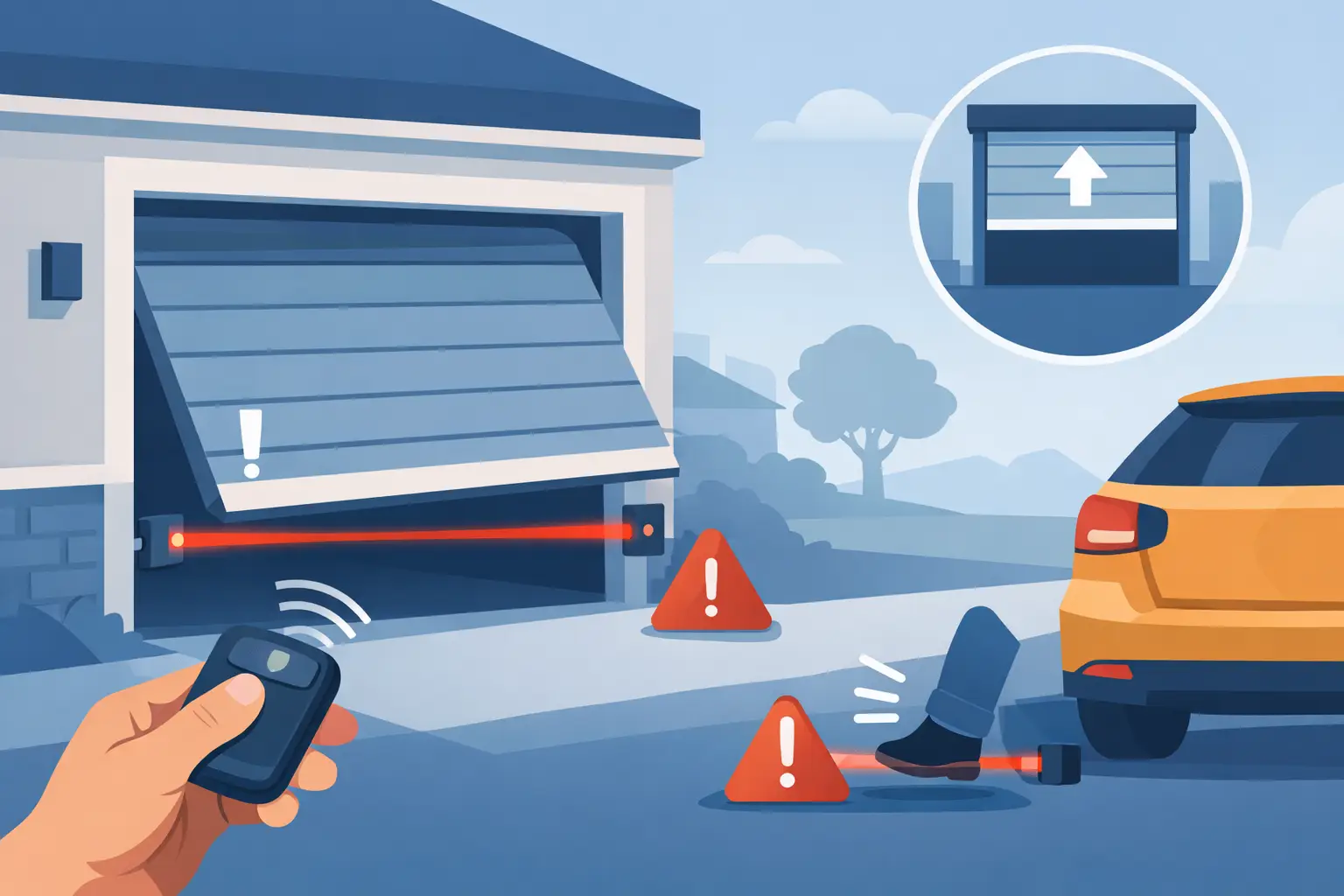
A garage door that starts down, reaches the floor, then immediately goes back up can turn a normal morning into a frustrating delay. When a garage door reverses before closing, the opener is usually responding to something it believes is unsafe: an obstruction, a sensor problem, excess resistance, or an incorrect travel setting. The system is designed to prevent injury and property damage, but a false reversal still needs attention.
For Charlotte-area homeowners, this issue can leave the garage unsecured, trap a vehicle inside, or create a door that cannot be safely operated. A quick visual check may reveal a simple cause. If it does not, stop forcing the door closed and arrange a professional inspection. Garage doors are heavy, and their springs, cables, and tracks carry forces that are not safe for do-it-yourself repair.
Why a Garage Door Reverses Instead of Closing
Modern automatic openers have two main safety systems. Photo-eye sensors near the bottom of each track send an invisible beam across the garage opening. If that beam is blocked or misaligned, the opener will not close the door or will reverse it.
The opener also monitors resistance as the door travels. If the door meets too much resistance while closing, it assumes it has struck an object and reverses. That resistance may come from a small item on the floor, but it can also point to worn rollers, a bent track, a failing spring, damaged cables, or a door that is out of balance.
The timing of the reversal offers a useful clue. A door that reverses before it gets close to the floor often has a sensor or travel-related issue. A door that reaches the floor and then opens again may have excessive closing force, an improperly set down limit, or binding in the door system.
Check the Safety Sensors First
The photo-eye sensors are mounted a few inches above the garage floor, one on each side of the opening. Each should have a steady indicator light. A blinking or unlit sensor light typically means the sensors cannot see each other clearly.
Start by removing anything that may be crossing the beam. A trash can, gardening tool, bike tire, loose extension cord, or even a low pile of leaves can trigger the system. Then wipe both sensor lenses gently with a clean, soft cloth. Dust, cobwebs, and moisture are common causes of a blocked beam, especially in garages that stay open frequently.
Next, look at the sensor brackets. They can get bumped by a vehicle, lawn equipment, children, or stored items. Both sensors should face directly across the opening at the same height. If a bracket is visibly loose, it may need careful adjustment. Avoid bending the sensor hardware aggressively or bypassing the sensors. They are a required safety feature, not an inconvenience to work around.
Sunlight can also be a factor. Strong afternoon light shining directly into one sensor can occasionally interfere with the beam. If the issue happens at a particular time of day, a technician can verify whether positioning, sensor replacement, or a protective shade is appropriate.
Look for Obstructions and Door Binding
If the sensors appear normal, inspect the door’s path with the opener disconnected only if you can do so safely. First, make sure the door is fully closed. Pull the emergency release cord, then lift the door manually. A properly balanced door should move smoothly and stay near the halfway point without rapidly falling or flying upward.
Do not continue this test if the door feels extremely heavy, jerks during movement, hangs unevenly, or has a visible broken spring or loose cable. Reconnect the opener and call for service. A broken torsion spring above the door or an extension spring along the tracks can make the door unsafe to lift.
Check the tracks for obvious debris and inspect the rollers for cracks, missing pieces, or severe wear. Also look for a track that is bent, loose, or pulling away from the wall. A minor obstruction at the bottom of a track can create enough resistance for the opener to reverse. But do not try to straighten tracks with a hammer or loosen cable and spring hardware. Those repairs require the right tools and training.
A garage door that is binding may still close sometimes, which can tempt homeowners to ignore it. That is usually when a smaller repair becomes a larger one. Continued operation can damage the opener gear, pull the door off track, or place additional stress on the cables and springs.
Down Limits and Closing Force Can Cause False Reversals
Your opener needs to know exactly where the floor is. The down-limit setting tells it when to stop moving the door. If that setting is off, the opener may push the door too hard into the ground, detect the added resistance, and reverse.
Closing-force settings affect how much resistance the opener allows before reversing. These settings should not be adjusted simply to make a stubborn door close. Increasing force may hide a mechanical problem and reduce the protection that the safety system provides.
Some homeowners can follow their opener manufacturer’s instructions to make a small down-limit adjustment. This may be reasonable when the door is otherwise moving smoothly, the sensors are aligned, and there is no sign of damage. If the setting repeatedly goes out of adjustment or the door needs a major force increase to close, the issue is likely with the door itself rather than the opener.
Newer openers may use electronic travel limits that need to be reset after a power outage, opener replacement, or service work. Older units may have manual adjustment screws. The method depends on the opener model, so guessing can create more problems than it solves.
When the Problem Is More Than the Opener
An opener does not lift or lower the door by itself. It guides a door that should be properly balanced by its spring system. When springs weaken or break, rollers fail, cables fray, or a track shifts, the opener has to work harder than it should. Reversing during closing can be one of the first signs that the door is no longer moving correctly.
Watch for these related warning signs:
- The door closes unevenly or one side appears lower than the other.
- The opener strains, hums, or makes grinding sounds during operation.
- The door is unusually heavy when disconnected from the opener.
- A cable is loose, frayed, or wrapped unevenly around a drum.
- The door has come off track, even slightly.
These symptoms call for professional service. Never attempt to replace springs, reset a cable, or force an off-track door back into place. Torsion springs are under high tension, and a cable repair done incorrectly can cause the door to drop or shift unexpectedly.
What You Can Safely Do Before Calling for Repair
Homeowners can clear the doorway, clean the sensor lenses, confirm that nothing is pressing against the door, and check for visible damage from a safe distance. You can also replace remote batteries if the remote is behaving inconsistently, although a remote issue alone does not usually cause a door to reverse at the floor.
If the garage must be secured overnight, do not leave a partially closed door unattended. When the door and opener are otherwise intact, using the wall control while holding the button may allow some opener models to close despite a photo-eye issue. This is only a temporary measure while you watch the door continuously. Do not use this method if the door is binding, off track, damaged, or reversing because it hits the floor.
A qualified technician can identify whether the cause is sensor alignment, opener adjustment, worn rollers, a damaged track, failing springs, or another mechanical issue. Family Garage Door Repair Charlotte NC provides clear recommendations and free estimates, so homeowners can understand the needed repair before work begins.
Preventing Future Reversal Problems
Keeping the sensor area clear and cleaning the lenses periodically helps prevent many false reversals. It also helps to listen to the door. A smooth door should not scrape, shake violently, or make the opener sound strained.
Professional garage door maintenance is especially worthwhile when the door is used multiple times each day. During a service visit, a technician can check balance, inspect springs and cables, tighten appropriate hardware, assess rollers and hinges, lubricate moving components with the proper product, and test the opener’s safety reversal function. That attention can catch worn parts before they leave the garage door stuck open at the least convenient time.
A reversing door is doing its job by reacting to a condition it considers unsafe. Treat that reaction as useful information, not something to override. A clean sensor lens may solve the problem, but when the door is heavy, noisy, uneven, or repeatedly reverses, a professional repair is the safest way to restore dependable access to your home.



